
Pinned in this thread
Minnesota requires manufacturers to offer parts, tools and documentation to owners and independent repair shops on fair and reasonable terms for equipment sold on or after July 1, 2021.
Under Minnesota’s law, documentation must be free, except for a reasonable charge for printed copies.
A federal copyright exemption allows getting around software locks when it is necessary to diagnose, maintain or repair a consumer device.
Cheaper repairs keep phones in use longer, and that is one of the best ways to spend less on phones overall. For years, owners and independent shops ran into barriers: parts that were hard to buy, manuals that were not public and warnings that repairs would void the warranty. Federal and state law now address several of those barriers.
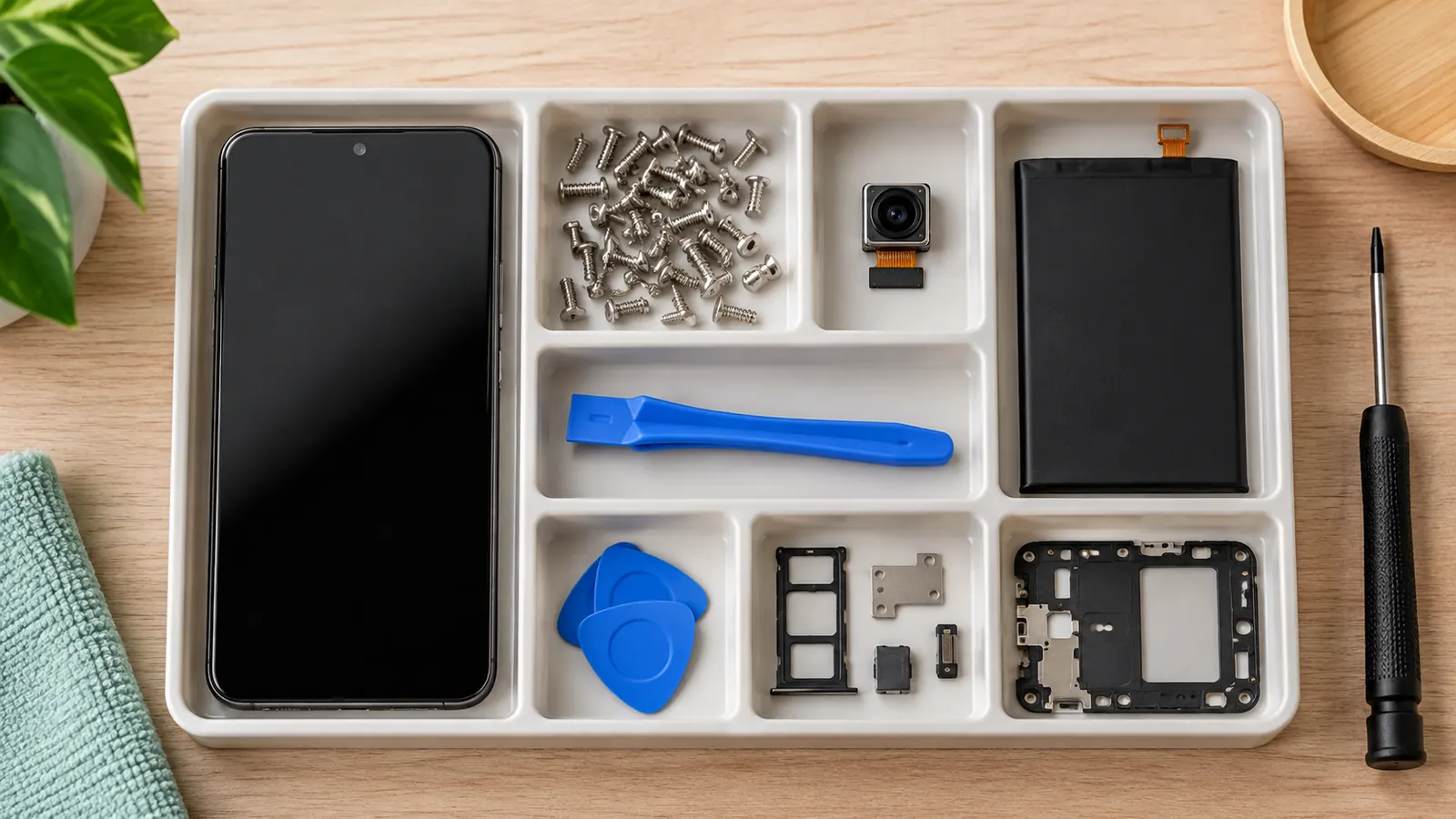
Federal warranty law: you can use independent repair
The Magnuson-Moss Warranty Act is the federal law on consumer product warranties, and the FTC enforces it. As the FTC explains, companies cannot void your warranty or deny coverage solely because you used a part made by another company or had repairs done by someone not associated with them, unless they provide the part or service free under the warranty. They can refuse coverage for defects or damage actually caused by third-party parts or service.
The FTC’s consumer warranty guidance makes the same point: federal law says a manufacturer cannot require you to use specific parts or services to keep warranty coverage unless it gives you those parts and services free or gets a waiver from the FTC.
In 2022, the FTC settled cases against three companies, makers of motorcycles, generators and grills, that told customers their warranties would be void if they used anyone other than the company or its authorized dealers. The settlements required them to tell customers in their warranties that independent service and third-party parts will not void coverage. The products were not phones, but the law is the same.
Tip: If anyone tells you that a phone warranty is void because you used an independent repair shop or a non-original part, the FTC asks you to report it at ReportFraud.ftc.gov.
Federal copyright law: repair exemption
Phone software sometimes stands in the way of a repair, for example when a replacement part has to be paired or calibrated. Federal copyright law generally prohibits getting around software locks, but the Librarian of Congress grants exemptions. The current regulation, at 37 CFR 201.40, includes one for devices primarily designed for consumers: circumvention is allowed when it is a necessary step to diagnose, maintain or repair the device and is not done to access other copyrighted works. Repair is defined as restoring the device to work according to its original specifications. A separate exemption covers unlocking a device to use another network; see Is Unlocking a Phone Legal? The Copyright Rule Explained.
State law: Minnesota as an example
Some states have passed “digital fair repair” laws. Minnesota’s, in section 325E.72 of its statutes, is a useful example of how these laws work:
| Requirement | What Minnesota’s law says |
|---|---|
| Who is covered | Manufacturers of digital electronic equipment sold or used in Minnesota |
| Who benefits | Owners and independent repair providers |
| What must be offered | Documentation, parts and tools, including updates, on fair and reasonable terms |
| Price of parts and tools | Equivalent to the lowest cost and most favorable terms offered to authorized repair providers |
| Documentation | Free, except a reasonable charge for printed copies |
| Timing | Within 60 days after the equipment is first sold in Minnesota |
| Which equipment | Equipment sold on or after July 1, 2021 |
| Enforcement | By the state attorney general; a violation is an unlawful practice |
The law defines a tool broadly, including software that can pair a part or calibrate it so a device works fully after repair. It also defines a part as any replacement part, new or used, that the maker offers to authorized repair providers.
What these laws do not do
Minnesota’s law has limits that are typical of the category:
- Makers do not have to reveal trade secrets, except as needed to provide the parts, tools and documentation.
- They do not have to sell parts they no longer make or provide to authorized shops.
- They do not have to provide tools that would override anti-theft security set by the owner without the owner’s authorization.
- Video game consoles, farm and construction equipment and several other categories are excluded.
- Makers are not liable for damage caused by repairs done by owners or independent shops.
What this means for you
- You can choose an independent repair shop, or fix the phone yourself, without automatically losing the warranty.
- If the maker covers a defect under warranty, it cannot refuse simply because you once used an independent shop for a different repair.
- In states with repair laws, you or your repair shop may be able to buy genuine parts and get manuals directly.
- Check your own state: laws vary, and new ones keep passing. Your state attorney general’s office is the place to ask.
The bottom line
Independent repair is legal, and using it does not by itself void a warranty. Federal copyright rules allow working around software locks to repair a consumer device, and states such as Minnesota now require makers to offer parts, tools and manuals on fair terms. All of that makes a repair a realistic alternative to replacing a phone; see Fixing a Cracked Phone Screen: Repair Options and Costs to Weigh.